


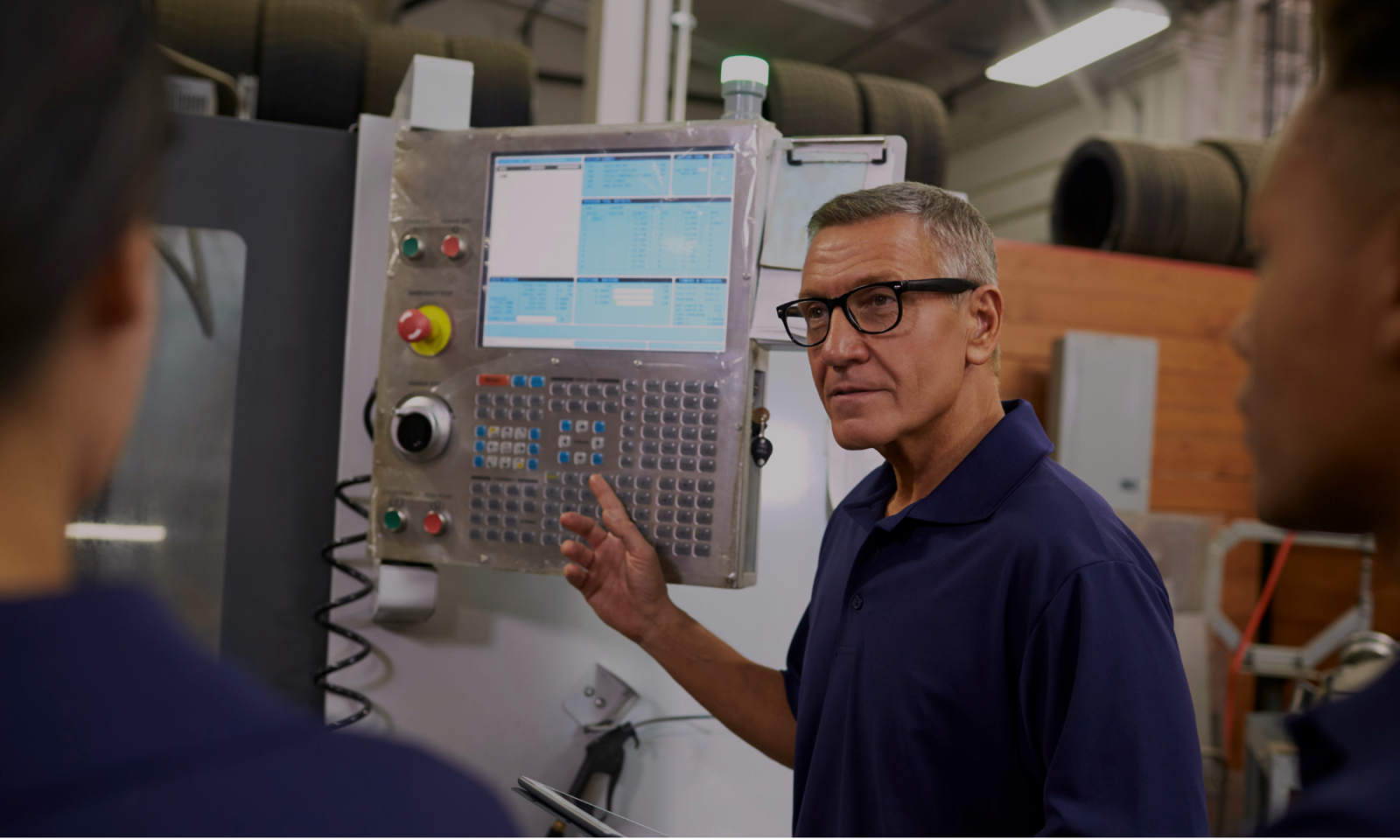
When a machinist who's been with you for fifteen years finally retires, it's an emotional day. Years of showing up, problem-solving, training new hires, and just being a steady presence on the floor don't go unnoticed. People like that are hard to replace, and harder to say goodbye to.
But a few weeks later, the reality of their absence sets in, and you realize the true cost of relying on tribal knowledge in your machine shop.
A repeat job comes in, one he used to run without even glancing at a setup sheet, and nobody else in the shop can now remember why he ran that particular insert instead of the one in the catalog, or what speeds and feeds he'd settled on after dialing it in over a few runs. The setup that used to take him twenty minutes now takes someone else the better part of a shift.
In this article, we uncover what happens to all the setups and the little decisions that took years to get right, once the person who carried them in their head walks out the door. And more importantly, what your shop can do well before that day comes.
What is tribal knowledge?
Tribal knowledge refers to the operational know-how that exists only in people's minds rather than in any documented form, whether that's a manual, a setup sheet, or software. It's accumulated through years of hands-on experience and is typically never recorded, meaning it stays with the individual until it's either deliberately passed on or lost when they leave.
To really understand why this knowledge is so hard to catch before it walks out the door, it helps to look at it in three simple layers:
Explicit Knowledge: This is formal, documented information. It includes CAD models, blueprints, manufacturer tooling catalogs, and standard material data sheets. While essential, explicit knowledge only describes how a process should work under ideal conditions.
Implicit Knowledge: This consists of the unwritten habits, workarounds, and shortcuts developed by experienced operators. For example, a machinist might know from experience that a specific machine tool requires a 15% reduction in feed rate compared to the catalog recommendation to prevent chatter. This knowledge is conscious and easily articulated, but it remains undocumented.
Tacit Knowledge: This is the deepest layer of knowledge, rooted in personal experience and muscle memory. In a machine shop, tacit knowledge includes the ability to detect tool wear by the pitch of a spindle sound, or recognizing that a specific matte finish on a part means an insert is about to fail. Because this knowledge is tied to physical senses, operators often possess it without consciously realizing it.
When an experienced worker leaves a machine shop, the explicit knowledge remains behind in files, but the implicit and tacit layers are lost unless a system is put in place to record them.
Why tribal knowledge matters now more than ever
Nearly 2.8 million manufacturing workers are expected to retire by 2033. This looming exit highlights a broader crisis across the entire workforce. When Express Employment Professionals surveyed workers nearing retirement, more than 50% admitted they had shared half or less of their critical job knowledge with their successors. Even more concerningly, 21% of retirees leave the workforce without passing on a single piece of information.
If you’ve been operating under the assumption that knowledge transfer in a machine shop happens naturally on its own, this data might be a wake-up call.
In a machine shop, tribal knowledge shows up in very specific places, most of them tied to tooling. It's knowing which tool runs which job, and why that tool and not one of the three others that could technically do it. It's the speeds and feeds dialed in over a few runs, adjusted by feel until the finish and the cycle time were both right, and it's the unwritten rules of thumb that live in someone's head rather than on a setup sheet.
The good news is that none of this has to disappear, it just has to live somewhere other than memory.
Step-by-step guide to capturing tribal knowledge
Capturing tribal knowledge doesn't require starting a shop-wide major initiative, but rather a few consistent practices, prioritized around the people and jobs where the risk is highest.
Don't ask them to write it down
Expecting a senior machinist to sit at a computer and type out a standard operating procedure is a recipe for failure. They don't have the time, and often, their knowledge is muscle memory.
Instead, pair an apprentice with the senior machinist for a couple of hours during a complex setup. The apprentice’s sole job is to watch, ask questions, and pull out their smartphone to record short clips of the critical moments that they can rewatch anytime they’re in doubt and easily share them with the rest of the team.
Apply the 80/20 rule to the data
When you start moving this information off the shop floor and into a digital format, avoid the temptation to document every single detail. Trying to capture 100% of a process leads to over-complicated guides that nobody will read.
Focus on the 20% of unwritten secrets that actually keep the shop profitable. This means prioritizing setups where a mistake costs thousands of dollars, the jobs you run every single week, safety-critical steps, and the exact tasks that always trip up a new hire during onboarding.
Standardize the notes
Every veteran machinist has a private notebook tucked away in their toolbox. And when they retire, all of their optimized speeds, feeds, and specialized tool geometry tweaks vanish with them. You need a way to move those secret formulas out of private toolboxes and into the shop's collective brain.
This is where a modern tool management software like Toolhive becomes essential. When a CAM programmer pulls up a tool assembly for a repeat job, the real-world adjustments are sitting right there – the feed rate someone backed off because the material work-hardens, a photo of how the fixture actually sat, or a note that the first three parts off a fresh insert run hot and need a slower feed until things settle in.
Build an incentive culture
Sometimes, experienced machinists hold onto their secrets because they feel it’s their job security. If they are the only ones who can run a nightmare part, they feel indispensable. You have to change the culture from hoarding knowledge to gaining status by sharing it.
The way to do that is to give credit where credit is due. Celebrate the people who share knowledge, and make sure you recognize that teaching others is a core part of their job description.
This way, you acknowledge them as the craftsman they are, making them much more willing to teach the next generation.
Securing your shop's future
Running a machine shop is chaotic enough without having to worry about what happens when a key person takes a vacation, decides to leave, or retires. Taking just ten minutes at the end of the day to document a tricky tool assembly or setup gives you a massive amount of insurance.
Once you see the value of keeping that operational know-how on the floor, the next step is anchoring that knowledge directly into your tool management software, so the whole team has instant access.
With Toolhive, you can tie those critical tips and tricks directly to specific tool assemblies or work orders. If you want to see how easy it is to keep your tool data and shop floor wisdom in one place, sign up for a free Toolhive trial today.